
I Thought Waking Up With Neck Pain Was Just Part Of Getting Older. Then I Learned What My Pillow Was Doing After I Fell Asleep.
For anyone over 35 who spends the first hour of the morning stretching out the same stiff spot—only to repeat it again tomorrow.

The Guest Room Had Started Feeling Normal
I stood in the hallway holding my pillow against my chest.
Behind me, my husband Tom was still asleep.
Or pretending to be.
I had already flipped the pillow, folded it, and punched the filling into a ridge beneath my neck.
I had tried both sides of the bed.
Every position felt acceptable for a moment.
Then the familiar pull returned at the base of my neck.
The guest room was only a few steps away.
I knew which floorboard would creak because I had made the trip many times before.
Tom stirred when I reached the door. “Again?” he whispered.
“Go back to sleep,” I said.
I meant it kindly. It did not sound kind.
That was the part that hurt beyond the physical discomfort.
I was becoming short with someone I loved because I could not get comfortable.
Then I would lie alone with the question I had stopped saying aloud.
What if this is simply what mornings feel like after 35?

The Stiffness Was Taking More Than My Mornings
By 47, I had built a routine around my neck.
The heating wrap lived beside the coffee maker.
A tennis ball sat in my desk drawer for the tight spot near my shoulder.
When I backed out of the driveway, I turned my whole torso to check the blind spot.
The discomfort often eased later in the day, which made it easier to dismiss. I blamed stress, screen time, sleeping strangely, and eventually age.
But ordinary parts of life began to feel negotiable.
I put off tending the garden before breakfast because looking down felt like a bad bargain.
I hesitated over long drives.
I sat up slowly each morning and waited to discover how much movement the day would allow.
The problem was no longer one sore spot.
It was the feeling that life was quietly arranging itself around it.
I Kept Changing The Filling, But Not The Shape
I tried the sensible things first: a rolled towel beneath my neck, heat, mobility videos, desk adjustments, and a massage device.
Some felt good for a while.
None changed the practical setup waiting for me at bedtime.
Then came the pillows.
One was soft and luxurious until it collapsed.
One was firm enough to push my head forward.
One was a memory-foam rectangle whose packaging sounded far more specific than its shape looked.
Each purchase began with hope and ended in the guest-room cupboard.
That is what made the cycle exhausting.
It was not only the wasted money.
It was feeling foolish for hoping again.
Eventually I stopped asking which pillow was softest, firmest, or most expensive.
I started asking whether I was buying different versions of the same flat blueprint.

The Timing Kept Pointing Back To My Pillow
The moment that changed the search was a simpler question.
If the stiff spot was usually loudest after hours in bed—and often quieter after I had been upright and moving—then the overnight setup was one practical place to look.
A pillow supports the same sleeping position for hours at a time. Looking at the rejected pillows together, I saw the same compromise repeated.
When I added height beneath my neck, my head sat higher too. When I chose something soft enough for my head to sink, the support beneath my neck faded. When I turned onto my side, my shoulder and arm had to negotiate with the same rectangle.
The question was no longer simply “soft or firm?” It was “where does each part of me actually go?”

I Had Been Buying Different Versions Of The Same Flat Shape
I began thinking of the tradeoff as the “one-height trap.”
A head, neck, shoulder, and arm do not have the same shape or need the same amount of space. Yet a conventional flat pillow asks them to share one mostly uniform surface.
More loft may raise the head along with the neck. Less loft may leave a gap beneath the neck. A folded edge can move when the sleeper turns. The shoulder can crowd the pillow on the side.
Suddenly my failed purchases looked different. I had kept changing the material while accepting the same basic shape.
The better question was what the pillow allowed my head, neck, shoulder, and arm to do after I fell asleep.
A Pillow Has Four Different Jobs
I reduced the idea to four visible jobs:
1. Give the head a place to settle. A lower centre creates a distinct cradle instead of balancing the head on one uniform surface.
2. Keep a contour beneath the neck. A raised edge fills the space beneath the neck without relying on a hand-folded ridge.
3. Leave room for the shoulder and arm. Side cutaways create space when a side sleeper brings an arm forward.
4. Return toward its intended shape. Slow-rebound foam compresses gradually and recovers after pressure is removed.
For the first time, I had something more useful than “soft” or “supportive.” I had a shape I could actually see.
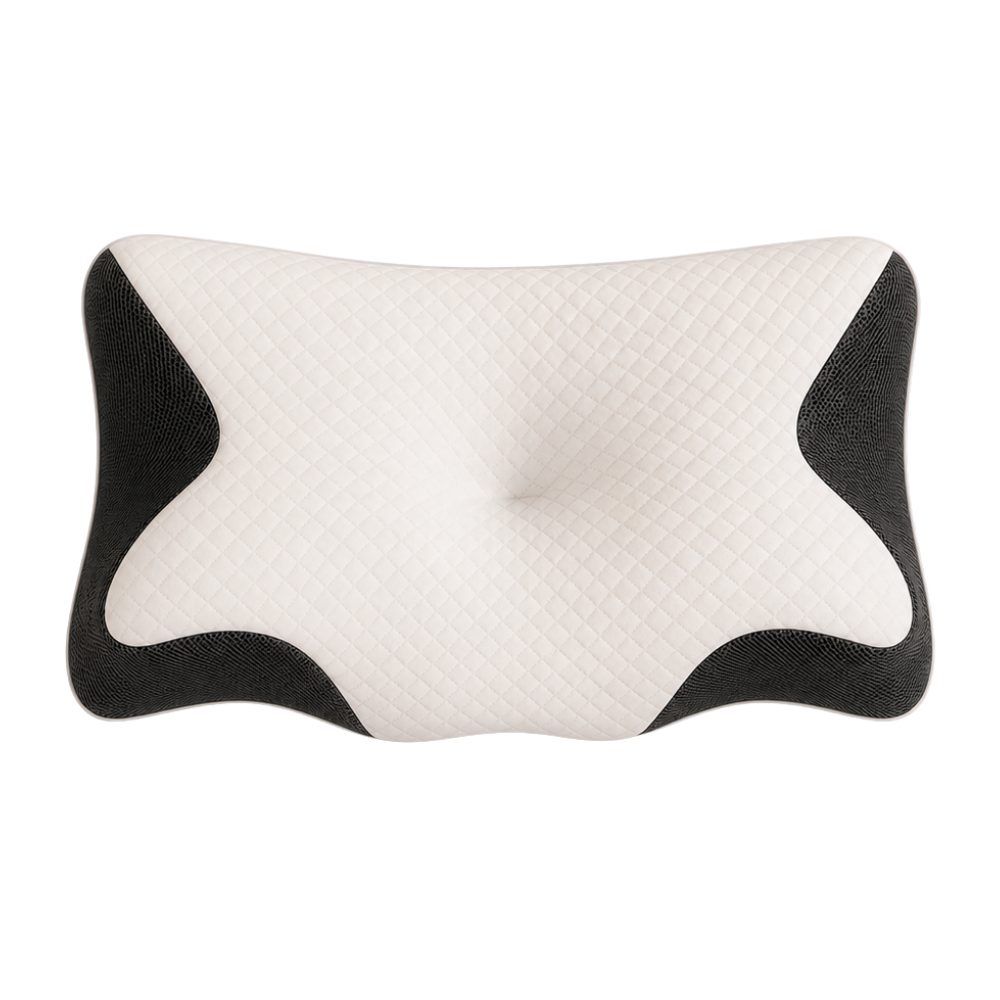
The difference was visible: a centre for the head, a contour for the neck, and room for the shoulder and arm.
RestedRelief Was Designed Around All Four
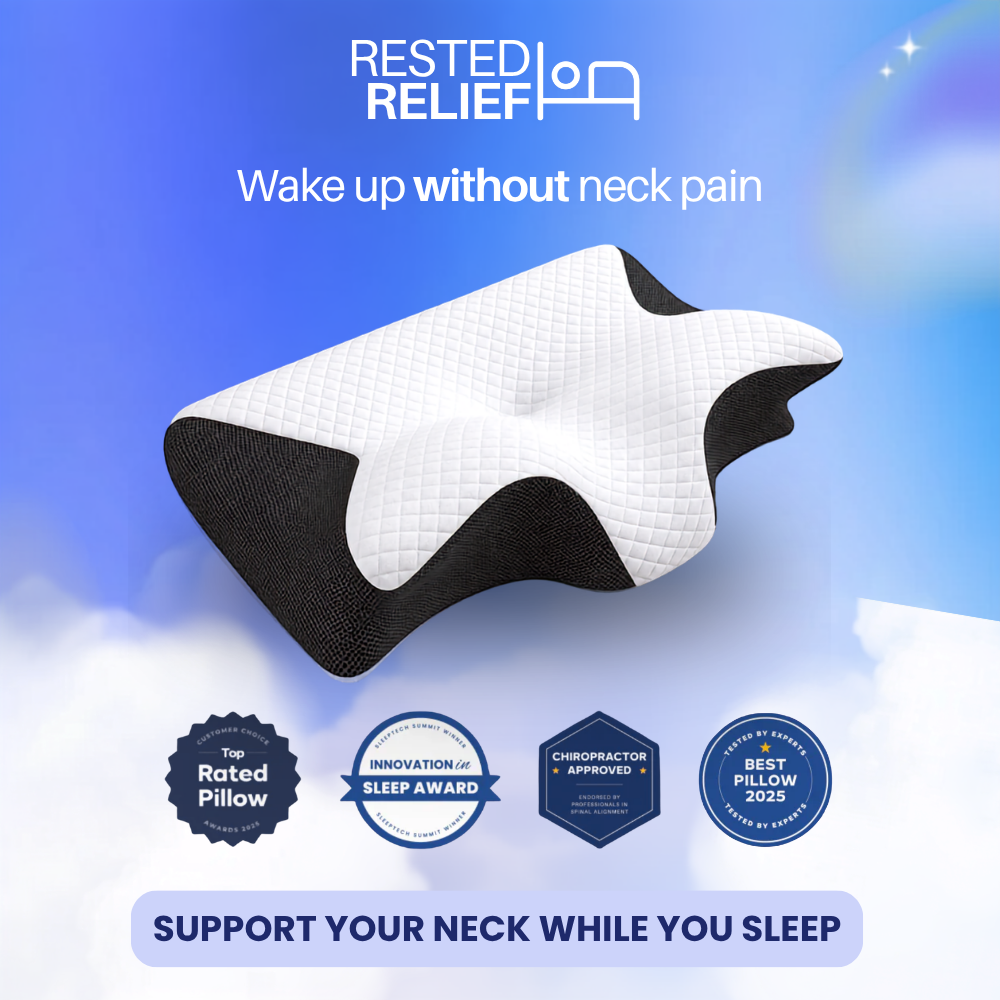
The RestedRelief™ Contour Relief Pillow made the four-job shape easy to see.
- A lower centre gives the head a place to settle.
- Curved edges sit beneath the neck.
- Grooves on both sides create room for the shoulder and arm.
- Two contour heights let you rotate the pillow to the side that feels most natural.
- Medium-firm, slow-rebound foam compresses gradually and returns toward its shape.
- A breathable outer cover removes for machine washing.
It is designed primarily for side and back sleeping, which matched the way I naturally moved through the night.
This was the first pillow whose shape answered the question before I even touched it.
Then I Stopped Rebuilding My Pillow In The Dark
The first night felt different.
After years of folding a flat pillow into place, the contour was impossible to ignore.
I rotated it and tried the lower height.
That felt more natural, so I kept it there and gave the new shape a few nights.
Erin B., one of the verified buyers below, said her own adjustment took about a week. Reading that made the unfamiliar first nights feel normal rather than disappointing.
Then I noticed the small thing that mattered most.
I had stopped folding and rebuilding the pillow in the dark.
The First Change Was So Ordinary I Almost Missed It
One morning, I made coffee before I reached for the heating wrap.
I only noticed because it was still sitting beside the kettle when Tom came downstairs.
Later that week, I backed out of the driveway and checked the blind spot without turning my whole torso.
The movement felt so ordinary that I sat there smiling with the car halfway into the street.
Then came the rosemary planter.
A Saturday morning, two mugs of coffee, and no private calculation about whether looking down was worth it.
The change I wanted was never a dramatic bedtime feeling. It was getting ordinary mornings back.

What Verified Buyers Actually Reported
Then I read what other RestedRelief buyers had noticed in their own nights and mornings.
“First pillow that actually fixed my morning neck pain. I wake up without stiffness for the first time in years.”
“Took me about a week to adjust, but now it is the only pillow I want to sleep on. Very supportive.”
“I stopped tossing and turning. The memory foam cradles my neck and I stay asleep all night.”
Danielle described the morning change I wanted. Erin made the adjustment period feel normal. Marcus described the tossing and turning I had almost stopped noticing because it had become routine.
Different sleepers. The same reason the shape had caught my attention.
Choose The Setup That Fits The Way You Sleep
Side or back sleeper? The centre cradle, raised contours, and side grooves are designed around the positions you naturally move between.
Unsure about the height? Rotate the pillow and choose the contour that feels most natural beneath your neck.
Worried about heat or cleaning? The breathable outer cover removes for machine washing.
Ready to try the shape? Today’s live Shopify price appears below, followed by the 30-night at-home trial.
Today’s price: $59.99
Try it in your own bed for 30 nights. If it is not the right fit, return the complete pillow under the sleep-trial terms for a refund of the product price.
Let The Shape And Your Own Mornings Answer The Question
You already know what another morning of folding, stacking, and rebuilding the same pillow feels like.
Now you know the question I had missed for years: where will my head settle, what will stay beneath my neck, and where will my shoulder and arm go when I turn?
RestedRelief answers that question with a visible four-job shape and two contour heights you can try in your own bed.
The 30-night sleep trial gives you time to notice the moments that matter: fewer midnight pillow adjustments, an easier start to the morning, or simply the feeling that your pillow is finally working with the way you sleep.
You do not need another vague promise. You need a different shape—and enough time to let your own mornings answer.
P.S. Today’s price and available pillow options are always shown on the product page.

Try the four-job shape in your own bed for 30 nights and let your mornings answer the question.
Common Questions Before You Try A Contour Pillow
4 practical answers
Will a contour pillow feel strange at first?
Answer It can. A visibly different shape may feel unfamiliar after years on a flat pillow. Try the contour height that feels most natural and give the new shape several nights. One verified buyer said her own adjustment took about a week.
Also check If the first contour feels too high, rotate the pillow and try the lower side.
Which sleep positions is it designed for?
Answer The supplied product information describes it as designed for side and back sleepers. The lower centre and raised contours create different zones, while side grooves leave room for the shoulder and arm.
Also check If you spend most of the night on your stomach, the product page lists the current dimensions so you can judge the profile.
What makes this more specific than another soft pillow?
Answer The useful comparison is the combination of visible features: a lower centre, curved neck contours, grooves on both sides, two rotatable contour heights, medium-firm slow-rebound foam, and a removable breathable cover.
Also check The combination gives your head, neck, shoulder, and arm distinct places to settle instead of asking one flat surface to support all four.
What should I confirm before ordering?
Answer Check the option you want, today’s price, current stock, available colours, dimensions, care instructions, and delivery estimate on the product page.
Also check The product page also shows the 30-night sleep trial and one-year manufacturing-defect warranty in one place.