


Your head has a place to settle
The lower center cradles your head instead of leaving it to drift across a flat surface.
Stay notified
FREEGet order updates and exclusive sleep offers.
Slow-rebound memory foam with a removable cover.
Size: 23.7 × 15.7 × 4.92 inches. Materials listed by the store: polyester, foam, memory foam, and cotton. Weight: 1.3 kg.
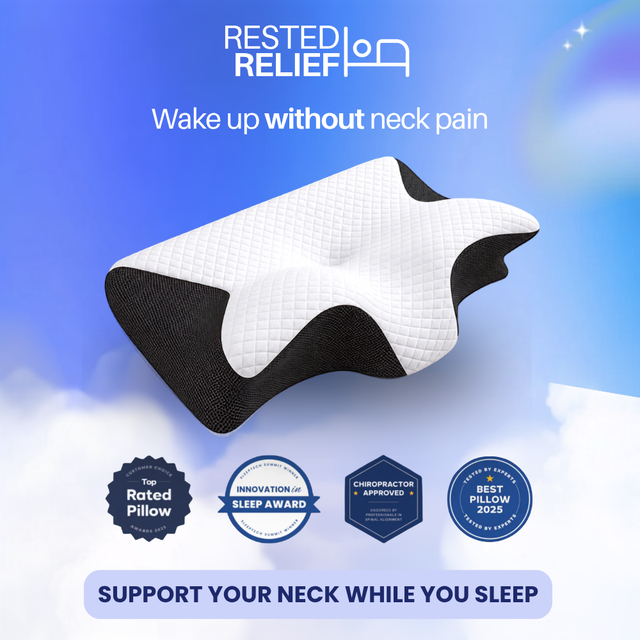
It is a shaped memory-foam pillow designed to support a comfortable sleeping position with a center head cradle, a raised neck contour, and side arm grooves.
One Contour Relief Pillow in your selected color with a removable, washable outer cover.
Let the shape do the work.
Place your head in the center cradle and rest the curved edge beneath your neck. Side sleepers can bring an arm toward either side groove. Give the different shape a few nights to feel familiar.
It is designed for both. Back sleepers can use the center cradle and neck contour. Side sleepers can use the supportive edge and arm groove.
The lower center cradles your head instead of leaving it to drift across a flat surface.
The raised edge fills the space beneath your neck after your muscles relax.
Side grooves give your arm space without bunching your shoulder toward your neck.
Remove the outer cover and machine-wash it cold on a gentle cycle, then tumble dry on low. Do not machine-wash the foam core.
A contoured pillow can feel different from a flat pillow. Some customers feel comfortable quickly; others report taking a few days to a week to adjust.
The Contour Relief Pillow is shaped to cradle your head and support the space beneath your neck, helping you settle into a more comfortable sleeping position.

You wake with the same tight spot. It often eases as the day gets moving, so it is easy to blame your desk, a workout, or age.
Many things can contribute to neck pain. But when discomfort is waiting the moment you wake, your pillow is one part of the overnight setup worth checking—especially if it sits too high, sinks too flat, or leaves a gap beneath your neck.

The discomfort is strongest first thing and often eases as your day gets moving.
Folding, stacking, and punching the filling works for a moment, then the support shifts again.
Side sleeping turns into a choice between crowding your shoulder and tucking an arm under the pillow.
You move around looking for support that still feels comfortable an hour later.
The Contour Relief Pillow uses three practical support zones. Each curve has a job, so you do not have to spend the night folding and reshaping the pillow yourself.

The raised edge sits beneath your neck and is designed to support its natural curve instead of leaving that space empty.
The lower center lets your head rest inside the pillow rather than balancing on top of an overfilled surface.
The cutaway sides give side sleepers somewhere to place an arm without bunching the pillow or crowding the shoulder.
Most people do not fall asleep and wake up in exactly the same position. The contour is designed to remain useful as you move.

Rest your head in the center cradle with the contour beneath your neck. The shape supports the gap without relying on a tall stack of filling.
Use the supportive edge beneath your neck and bring your arm into a side groove to give your shoulder and arm more room.
Slow-rebound memory foam compresses gradually and returns to shape as you move during the night.
Comfort should not mean forcing a position. If the pillow feels wrong for your body or symptoms worsen, stop using it and speak with a qualified healthcare professional.
Individual experiences vary.
| Feature | Ordinary flat pillow | Contour Relief Pillow |
|---|---|---|
| Surface | One mostly uniform surface | Neck ridge plus center head cradle |
| Side-sleeping space | No built-in place for the arm | Cutaway grooves on both sides |
| Foam response | Filling can shift or compress | Slow-rebound memory foam |
| Care | Depends on the pillow | Removable, machine-washable cover |
Start with one pillow, choose two for free shipping, or choose three to unlock the current mystery gift. Select your preferred colors in the offer module above.
The current store policy offers 30-day returns for eligible items in unused, original condition. Read the return policy.
Morning neck pain can have many causes, and a pillow cannot diagnose or treat them. But if your pillow leaves your head tilted, sinks flat, or does not support the space beneath your neck, changing your sleep setup may help you find a more comfortable position. Persistent, severe, or worsening pain should be discussed with a healthcare professional.
It is designed for both. Back sleepers can use the center cradle and neck contour. Side sleepers can use the supportive edge and built-in arm grooves. Choose the orientation that feels most comfortable for your body.
The pillow uses slow-rebound memory foam designed to feel supportive while gradually contouring around your head and neck.
A contoured pillow can feel different from a flat pillow. Some customers feel comfortable quickly; others report taking a few days to a week to adjust.
Remove the outer cover and machine-wash it cold on a gentle cycle, then tumble dry on low. Do not machine-wash the foam core.
Rested Relief currently accepts eligible returns requested within 30 days of delivery. Items must be unused, in their original condition, with tags and original packaging. Contact contact@restedrelief.co before returning an order and review the full policy for exclusions.
Designed for sleep comfort and support. Not intended to diagnose, treat, cure, or prevent a medical condition.

